Addiction & Grief

Explore how grief and addiction intersect, from numbing emotional pain through substance use to navigating loss and recovery.

1 episode
Content note: Discussions may include addiction, substance use, relapse, overdose, incarceration, suicidal thoughts, bereavement, and recovery challenges.

About this topic

Grief and addiction can be deeply connected. For some people, substances become a way to escape painful emotions, avoid unresolved loss, or cope with experiences that feel too overwhelming to face. But numbing grief doesn’t make it disappear.

Recovery can bring those feelings back to the surface, sometimes revealing losses that were never fully processed. Relapse, relationships, incarceration, and the challenges of rebuilding life can add further layers to the experience.

These conversations explore the complicated relationship between grief and substance use, the challenges of recovery, and the importance of finding support and healthier ways to process emotional pain. They also remind us that healing doesn’t mean forgetting or never struggling again. It means learning to feel, seek help, and move forward one day at a time.

If you need support right now

In the US, call or text 988 to reach the Suicide & Crisis Lifeline.

Outside the US, find a local helpline at findahelpline.com.

All Addiction & Grief Episodes

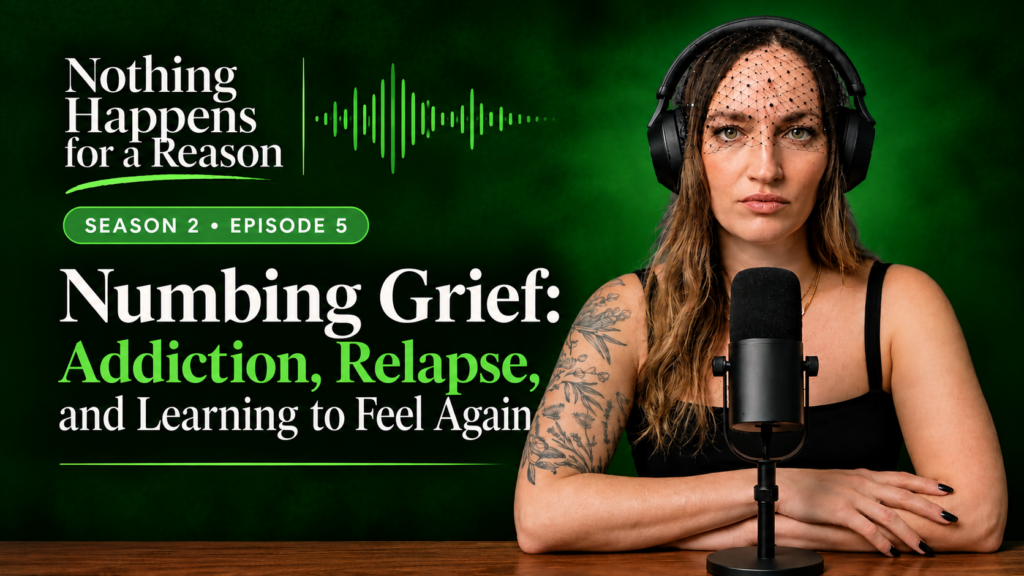
Numbing Grief: Addiction, Relapse, and Learning to Feel Again

58:33

Common questions about addiction & grief

How are grief and addiction connected?

Grief can bring overwhelming emotions that some people struggle to process. Substance use may become a way to temporarily numb sadness, anger, guilt, or emotional pain. However, avoiding those feelings can make it harder to work through grief.

Can grief trigger an addiction relapse?

Yes. A significant loss or painful emotional experience can increase the risk of relapse, particularly when someone has previously used substances to cope with difficult feelings. Support, recovery tools, and reaching out to trusted people can help.

Why can it be difficult to process grief during addiction recovery?

Substances may have helped someone avoid painful emotions for a long time. When they stop using, unresolved grief and other feelings can become more noticeable. Learning to recognize and process these emotions can take time and support.

Does recovery mean someone will never experience cravings or thoughts of relapse?

No. Recovery does not mean difficult thoughts or cravings will never return. It involves developing tools, building support systems, and learning how to respond to challenging moments without returning to substance use.

How can someone support a person experiencing grief during recovery?

Listen without judgment, offer compassion, and encourage connection with trusted recovery support and professional help. Avoid minimizing their loss or assuming that recovery means they should no longer struggle emotionally.

Newsletter

Signup for news and special offers!

Title
.